
Project
Kenya: Food forests for the future
In Kilome Subcounty, Makueni County (Kenya), many families are no longer able to grow enough food. Drought, water scarcity and depleted soil are making farming increasingly difficult. As a result, families do not have enough to eat, incomes are declining and children miss school days because they have to help find food or water.
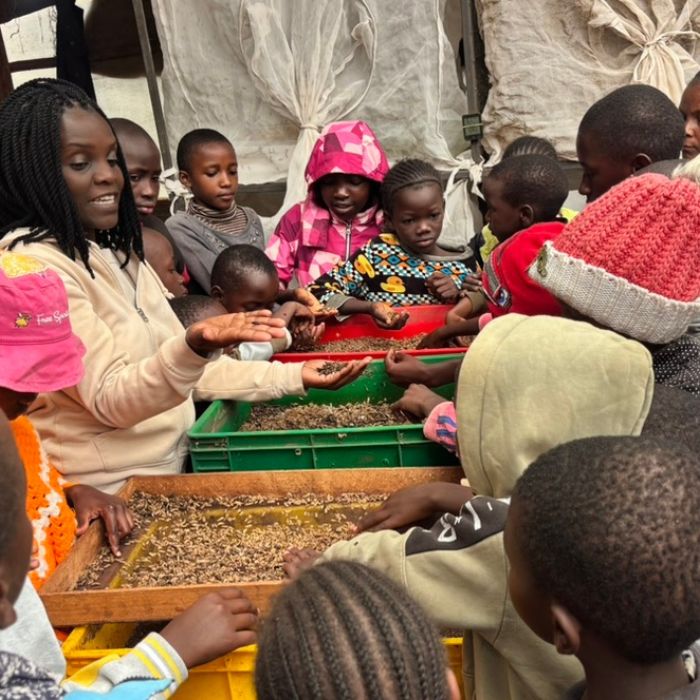


The solution: learning to work with nature.
Through the Food Forest Learning Program, children and their families learn how to work with nature instead of exhausting it. The program introduces food forests: diverse ecosystems of trees, shrubs and plants that produce food, restore the soil, retain water and bring back biodiversity. The project is implemented by our local partner Feedback to the Future. By combining education with practical training, families gradually build their own sustainable food system. Children not only learn how to grow food, but also develop knowledge and skills they will carry with them throughout their lives and pass on to the next generation.
What we do
Children and parents participate in workshops on agroecology, biodiversity and sustainable agriculture, tailored to local conditions. At the same time, they work hands on to establish small food forests with fruit trees, vegetables, legumes and medicinal plants. Through cooking workshops and herb gardens, families discover how locally grown products contribute to healthy and varied nutrition. Activities focused on environmental awareness and nature conservation strengthen the connection with their surroundings. By working together with schools and local farmers’ organizations, knowledge is shared and firmly embedded in the community.
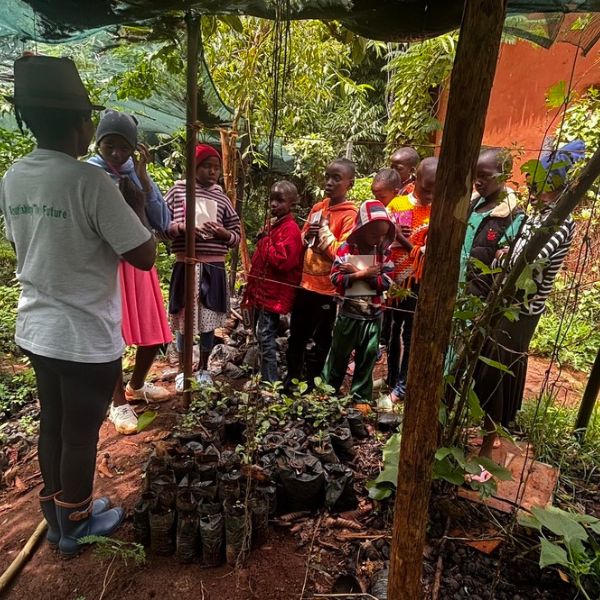

What can your company contribute?
The program directly reaches 60 children and their families, around 300 people in total. Within two years, 70 percent of participating families establish their own food forest, resulting in greater food security, improved health and additional income. In this way, a sustainable food system is created that makes families less dependent on drought and failed harvests. The strength of this model lies in its simplicity and scalability. Many more families are ready to start their own food forest. Will you join us as a business partner to help scale this model further in the dry regions of Kenya?